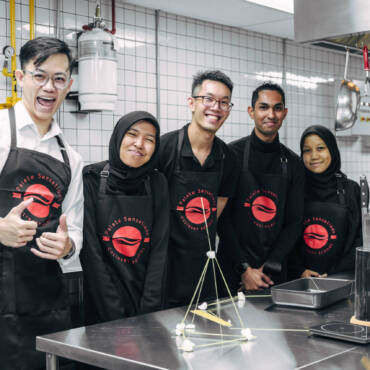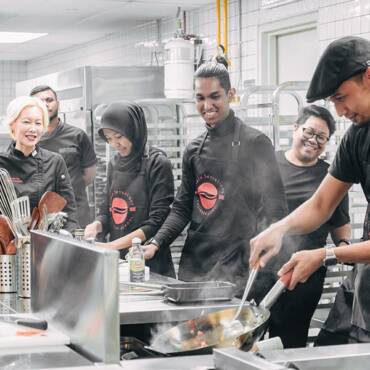
The meeting room is booked. The training calendar has a gap. Someone suggests team building, and the familiar question arrives: “What can we actually do together?” A kitchen offers a rather appealing answer: a shared task, a few decisions to make and something delicious to show for the effort.
HRD Corp team building should connect a shared activity with workplace learning. Palate Team Building Malaysia now offers a dedicated HRD Corp claimable culinary programme in collaboration with GOMARR Academy. Eligibility and funding depend on the employer, the applicable requirements and grant approval; the activity itself is only part of the planning.
Key takeaways
- HRD Corp supports workforce training; a team outing does not become claimable simply because it is called team building.
- Palate Malaysia’s dedicated programme combines a cooking challenge with presentations, reflection and shared dining.
- Choose a practical learning goal, such as clearer handovers or making decisions together.
- Confirm the exact course and training provider before preparing an employer application.
- Funding remains subject to eligibility, prevailing guidelines and approval; uncovered fees remain the employer’s responsibility.
- Use the current programme page and HRD Corp guidance when planning your date and application.
 What does HRD Corp team building mean for your company?
For HR, the useful distinction is between an enjoyable event and an eligible training programme. HRD Corp (Human Resource Development Corporation) supports retraining and upskilling linked to business needs through its Claimable Courses scheme. Your proposed session must meet the relevant requirements; choosing a cooking activity, a venue or a trainer does not establish approval by itself.
The official HRD Corp Claimable Courses guidance is the starting point for checking the scheme and its current conditions. The training purpose matters: what do colleagues need to practise, and how will the session help them explore it?
You might want departments to explain their needs more clearly, a newly formed group to share responsibilities, or a project team to notice how it makes decisions under pressure. Those are different briefs. Put the need into a sentence before choosing the format.
Treat “claimable” as the beginning of a verification conversation, rather than a promise that every employer or expense will qualify. It also does not mean every Malaysia team-building programme has the same registration or funding arrangements.
What can your team do together in a culinary programme?
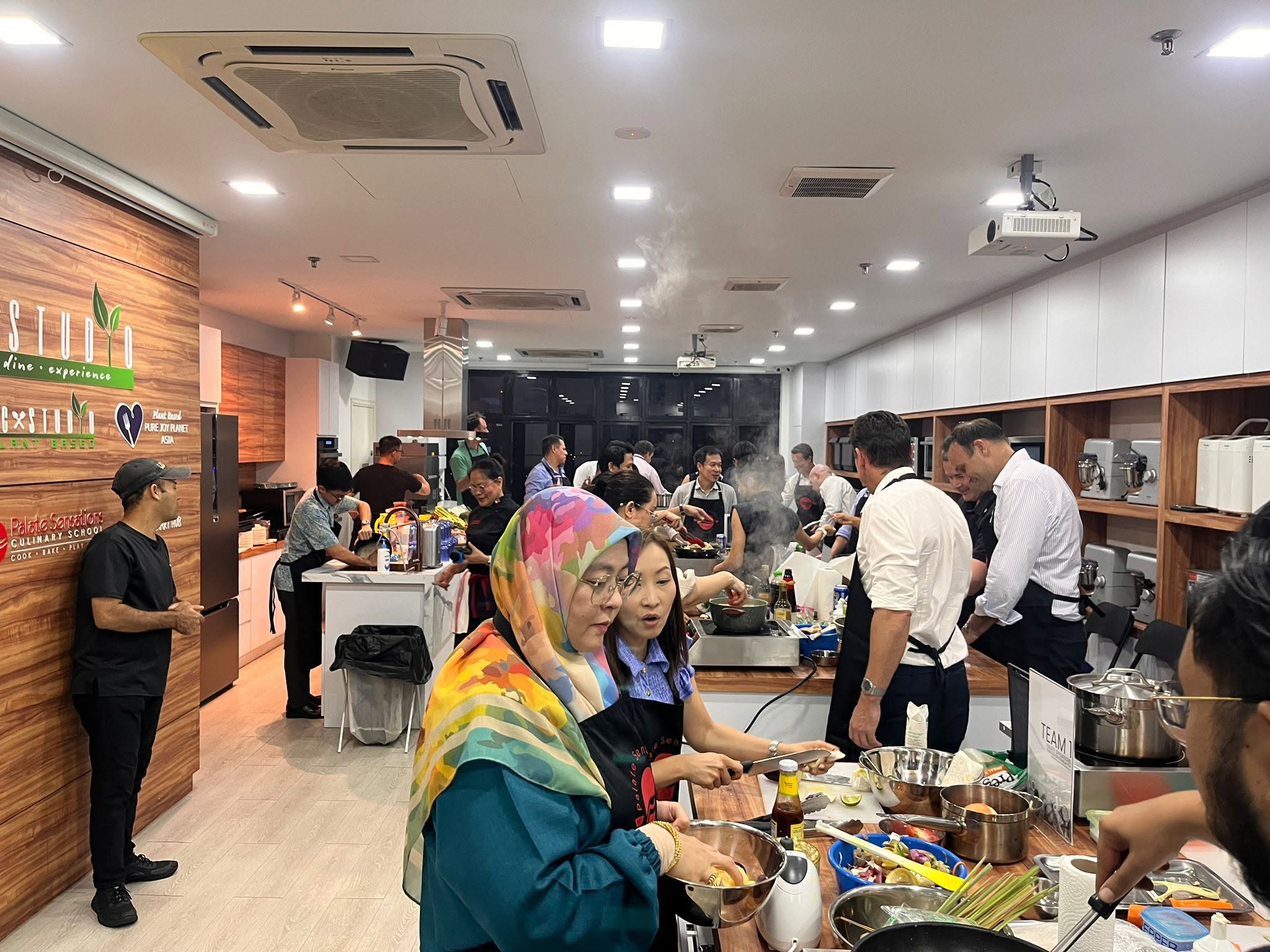
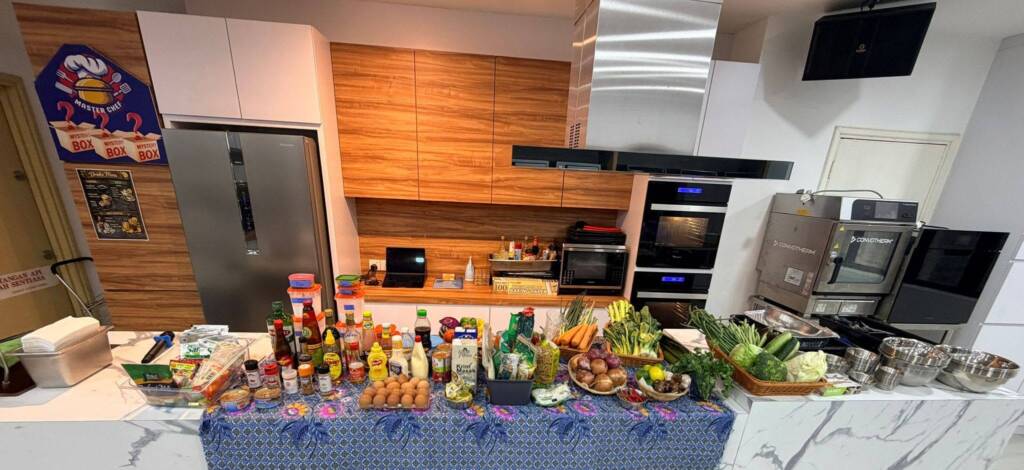
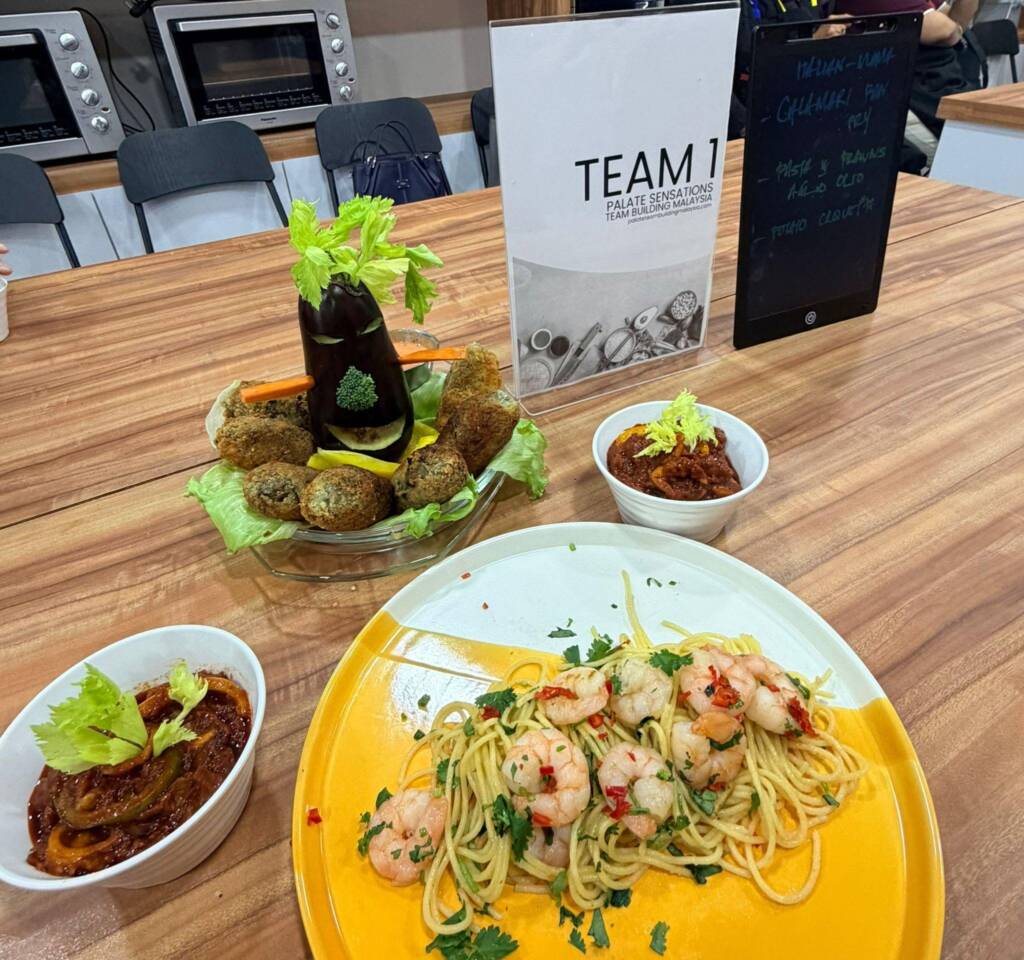
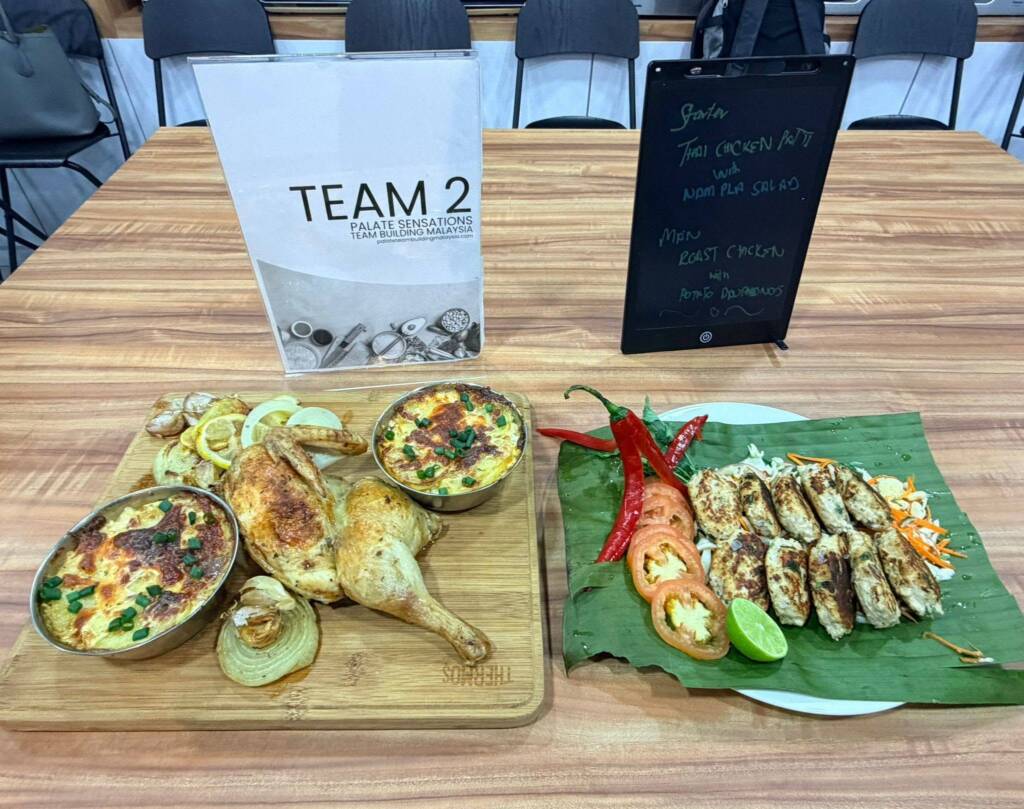
The published programme brings colleagues through icebreakers, a Mystery Box cooking challenge, team presentations, guided reflection and dining. That gives the group a shared experience to discuss, alongside the food it creates. The workplace value comes from paying attention to how people plan, communicate and support one another during the task.
Start talking before the cooking begins
An introductory activity gives people a first reason to speak. You can help by mixing familiar colleagues with people they work alongside less often. Make introductions warm and straightforward; nobody needs to reveal an embarrassing secret to earn a place on the team.
Plan and create as a group
A cooking task offers small decisions with visible consequences. Who understands the brief? Which job needs doing first? Has anyone checked that the person preparing one element knows when the others will be ready? These questions can sound remarkably familiar to anyone who has managed a project.
Give colleagues room to contribute in different ways. Someone may be comfortable organising the task, another may notice a missing ingredient, and another may be good at explaining an idea. Ask the facilitator how roles will work for the chosen session rather than arriving with a rigid hierarchy.
Explain the result and listen to other teams
A presentation is a chance to describe choices: what the group tried to make, what it changed and how it worked together. Encourage explanation over bravado. A thoughtful account of a decision can be more useful than a polished speech with very little behind it.
Reflect, then enjoy the meal
Leave space to talk about the process before the details disappear into the lunch conversation. What made coordination easy? Where did someone need more information? A shared meal can then give colleagues a gentler setting to continue talking, without turning every mouthful into an assessment.
How do you choose a useful learning objective?
Choose one or two behaviours your team can recognise in everyday work. Clear instructions, shared decisions or helpful handovers are easier to discuss than a broad ambition to “improve teamwork”. Agree the objective with the organiser and ask how the activity and reflection will connect to it, without assuming that one session guarantees change.
- For clearer communication: ask people to explain a task and check what the other person understood.
- For shared planning: encourage the group to agree priorities before everyone becomes busy with separate jobs.
- For leadership: explore how colleagues invite contributions, notice uncertainty and support decisions.
- For cooperation across departments: discuss what each part of the team needs from the others to complete a shared result.
These are suggested learning questions to discuss with the facilitator, not additional advertised modules. Keep the brief manageable. A cooking session does not need to carry the entire annual people-development strategy on its shoulders.
 What should HR check before confirming a booking?
Confirm the exact course, provider, employer eligibility and application timetable before committing to a training plan. HRD Corp’s application guidance identifies the supporting documents needed and uses e-TRiS for submissions. Check the current rules with your HR team and provider; an event quotation or a place on the calendar is not a grant approval.
- Employer readiness: check your organisation’s eligibility and account position with the person responsible for HRD Corp matters.
- Course and provider: match the proposed training to the correct registered programme and provider details.
- Supporting documents: obtain the quotation or invoice, training schedule or course content, and trainer profile.
- Timing: apply in advance and check the approval lead time applicable to your training category before fixing the event date.
- Financial responsibility: confirm what has actually been approved and how any uncovered fees will be paid.
HRD Corp’s official SBL-KHAS application guidance explains the course/provider and document checks. Its rules should guide the application, alongside the current notice on approval timing. Do not assume that another company’s approved event establishes your own eligibility.
For this particular offer, ask Palate Malaysia and GOMARR Academy to confirm programme number 10001741934 against the proposal and application details. Use the dedicated programme information rather than generic enquiry-form fields when checking suitability.
How can the learning travel back to the workplace?
Use reflection to choose one small behaviour the group wants to try at work. A clearer handover, a short planning conversation or a check that everyone understands the task is easier to follow through than an ambitious list of changes. Agree who will revisit it, and ask what happened after the team has had time to try it.
Imagine a group discovering that everyone had a different idea of when their dish needed to be ready. The useful workplace question is not “Who got it wrong?” It is “Where else do we start work without agreeing what finished looks like?”
Another group might notice that the same confident colleague answered every question. Rather than labelling anyone, ask how the team could invite a second view before deciding. The experience becomes a prompt for discussion, not a diagnosis of people’s personalities.
At a later team check-in, ask whether the chosen habit helped, needed adapting or was forgotten. An honest answer is more useful than declaring a lasting improvement because everyone enjoyed the afternoon.
 How do you prepare a mixed team for the experience?
Share the purpose, practical needs and participation arrangements before the day. Tell colleagues they will be making something together and reflecting on the process, rather than being tested as professional cooks. Discuss dietary, religious and access requirements with the programme team early, and confirm what can be accommodated for your group.
Palate Team Building Malaysia’s facility follows a no pork, no lard and no alcohol policy. This wording should not be taken as a halal-certification claim. Raise any specific requirement during the enquiry so the team can discuss the practical arrangements.
Some colleagues may enjoy presenting; others may contribute more comfortably through planning, preparing or observing details. Ask how the session can give people a meaningful role without making public performance the only way to take part.
If you are comparing formats, the Corporate Activity Challenge and Fun Team Bonding Activity pages explain other Malaysia options. They should not be assumed to share the dedicated HRD Corp programme’s registration or funding status.
What else should HR know before making an enquiry?
Start with the details of the proposed course and your organisation’s requirements, then check them with the programme team. The answers below cover the main planning questions. For any application, use the current official guidance and the documents for your specific event rather than general assumptions about team building.
- Is every cooking team-building event HRD Corp claimable?
- No. A cooking activity is not automatically eligible. The employer must check the exact registered course and training provider, the applicable requirements and grant approval. Do not assume that the status of one programme applies to all team-building activities.
- How long is Palate Malaysia’s dedicated HRD Corp programme?
- The current dedicated programme page lists four hours and a minimum of 25 participants. Confirm these details and the latest arrangements with the programme team when requesting a proposal.
- Does HRD Corp funding cover the entire event automatically?
- No. Funding depends on employer eligibility, the applicable rules and the approved grant. Course fees not covered by approved funding remain payable by the employer. Confirm the financial arrangements before committing.
- What should we share when enquiring?
- Share your approximate headcount, preferred dates, available time, workplace learning goal and dietary or access requirements. State that you are asking about the dedicated HRD Corp programme so the team can discuss the relevant proposal and training documents.
Give your team something meaningful to do together
There is a pleasing moment when a group stops talking about teamwork and starts deciding who needs a hand. The result might be a shared dish, a better question or an idea worth taking back to the office. Start with the learning you want to encourage, then build the experience around the people taking part.
Explore the dedicated programme and ask which current arrangements fit your team. Bring your learning objective as well as your preferred date; both matter when planning a session that has purpose.
About the author
Lynette Foo is the founder of Palate Team Building Malaysia and a formally trained culinary professional with a background from Le Cordon Bleu Paris. With over 20 years of experience facilitating corporate team building events for more than 500 multinational and local companies in Malaysia and Singapore, Lynette combines deep culinary expertise with a practical understanding of team dynamics, workplace engagement, and experiential learning.