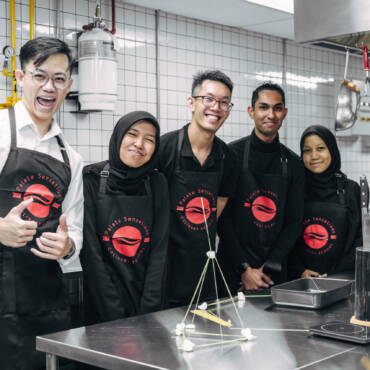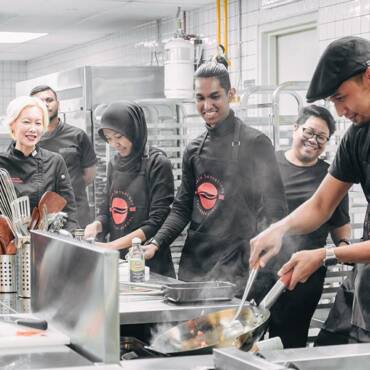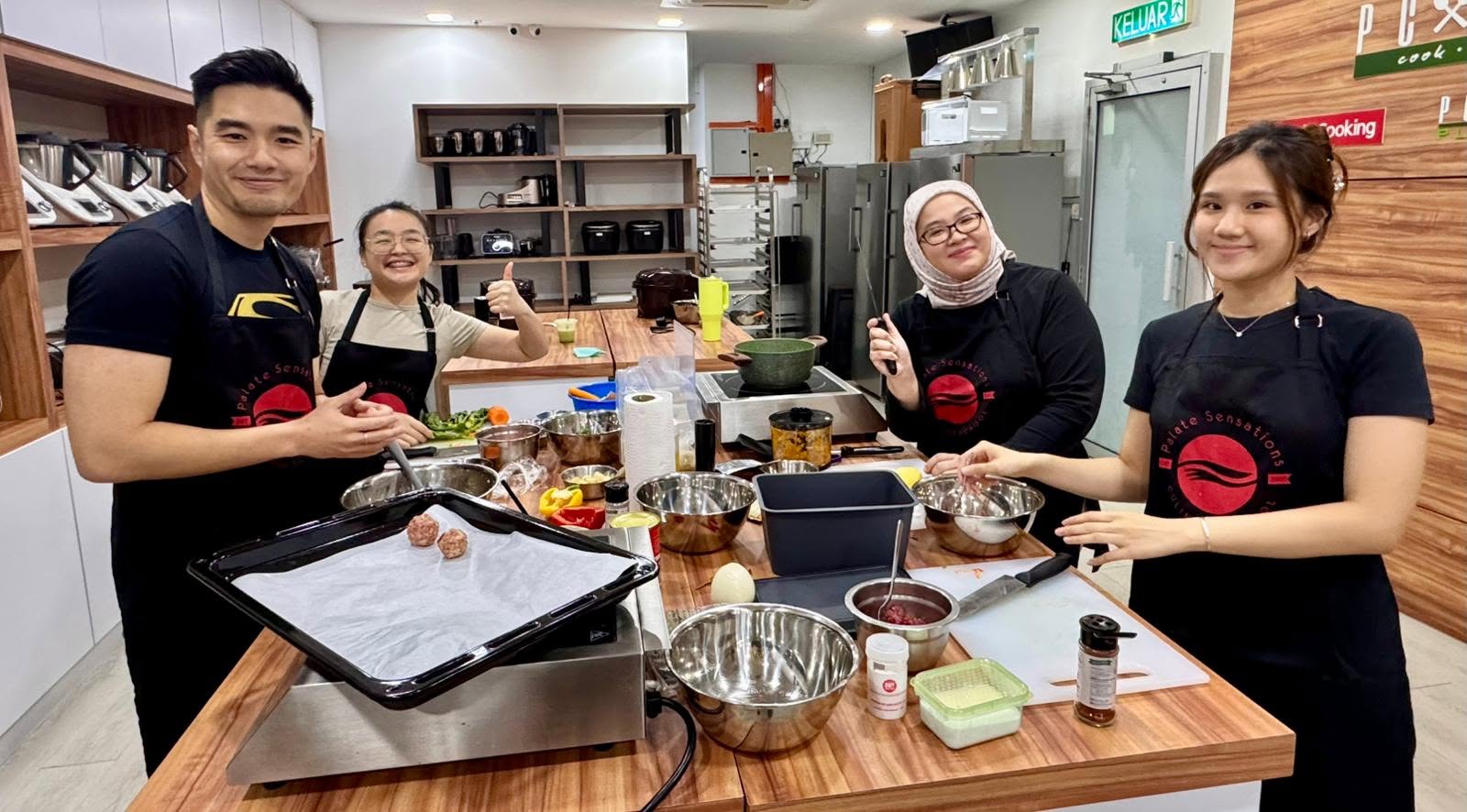
Within minutes, someone has taken charge of the heat, someone else is focused on timing, and the quiet colleague from the IT department turns out to have unexpectedly strong opinions about seasoning. By the time they sit down to eat what they have made, they have laughed, negotiated, made small mistakes, fixed each other’s mistakes, and created something together. That is why food team building works — not because of the food itself, but because of everything that happens on the way to the plate.
Key Takeaways
- Cooking together creates the three conditions real bonding requires: shared purpose, natural role distribution, and shared achievement — all in a single session.
- Food is the great equaliser. Unlike sports, escape rooms, or physical challenges, every team member can participate meaningfully, regardless of age, fitness, or cooking experience.
- Multi-sensory engagement keeps everyone involved throughout. There is always something to chop, taste, stir, or decide — which means no one quietly checks out.
- Kitchen mishaps are low-stakes by nature, which means mistakes lead to laughter rather than embarrassment — and laughter is where real connection begins.
- Palate Team Building has facilitated culinary team bonding for over 500 multinational and local companies in Singapore since 2005, with HR teams consistently reporting improvements in team communication, morale, and collaboration long after the session ends.
If you are an HR manager, L&D lead, or team organiser comparing options — cooking versus escape rooms, art jamming, outdoor activities, or wellness workshops — this article explains why food-based activities consistently outperform the alternatives. Not because food is trendy, but because of what happens in the brain and between people when they cook and eat together.
Why Eating Together Builds Trust Faster Than Almost Anything Else
Anthropologists have a word for the act of eating together: commensality. It is the practice of sharing a table, and it has been central to human bonding for as long as humans have gathered around fires. There is a reason almost every meaningful occasion — a celebration, a negotiation, a first meeting, a farewell — tends to involve food. We instinctively understand that sharing a meal means something.
Robin Dunbar, Professor of Evolutionary Psychology at the University of Oxford, identifies food sharing as one of the most powerful mechanisms for building social bonds. Offering food to someone — and accepting it in return — signals trust and generosity in a way that very few other interactions can replicate. It is a quiet, physical statement that says: I am not a threat. We are in this together.
When a team cooks the meal before eating it, that dynamic deepens. Preparing food together is an act of collective care. Every person contributes something — a technique, a decision, an instinct about when the sauce is ready — and the result belongs to everyone. The meal they eat is not just lunch. It is evidence of what they built together, and that matters more than most team bonding activities are willing to acknowledge.
For companies in Malaysia, this carries a cultural dimension that is difficult to overstate. Food here is not simply social. It is a shared identity — the thing that strangers bond over, that colleagues debate with genuine passion, that makes office conversations about chicken rice versus wonton noodles feel surprisingly meaningful. When a cooking team building session channels that instinct into a professionally structured experience, it does not feel forced. It feels like exactly the right kind of afternoon.
 How Cooking Quietly Reorganises the Org Chart
One of the most common reasons team bonding activities fall flat is hierarchy. When a manager and their team participate in the same workshop, the dynamic often defaults to deference. People wait to see what the boss thinks before they share an opinion. Real bonding rarely happens in that environment.
The kitchen has a useful way of rearranging this.
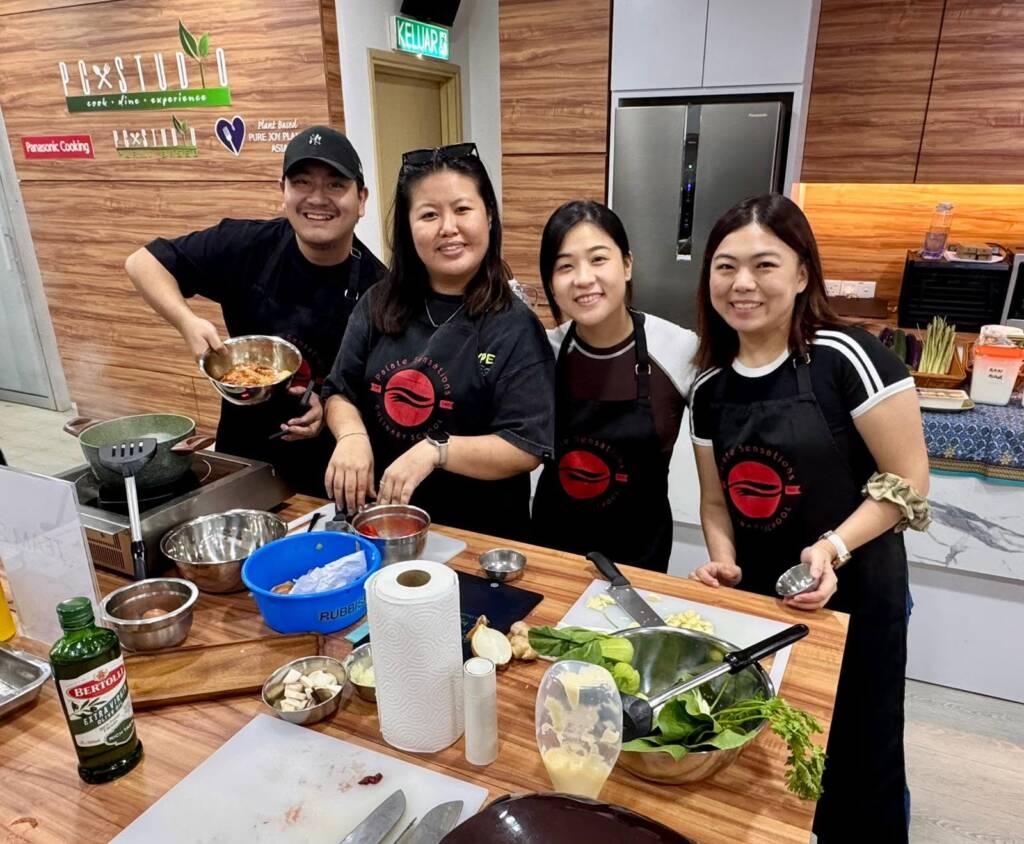
Cooking distributes roles based on what the task needs, not on who has the more senior job title. Someone takes charge of timing because they are naturally organised. Someone else turns out to have an instinct for seasoning. The person who is usually the quietest in team meetings can be deeply focused, capable, and quietly confident near a stove — and the whole group notices.
It is amazing what you discover about colleagues when a dish is at stake and there is no slide deck to hide behind. The senior director who cannot chop an onion and the junior executive who can do it efficiently — both learn something useful about each other in that moment. And so does everyone watching.
This levelling effect is one of the most frequently cited outcomes by HR managers after running a Palate Team Building session. Challenge-based formats, like those in the Corporate Activity Challenge programme, are specifically designed to surface this kind of dynamic — using mystery box tasks and timed cooking challenges to reveal how teams communicate, make decisions, and support each other when things get slightly chaotic.
In the best way, of course.
Five Senses vs. One Meeting Room
Most team building activities ask participants to sit, listen, and watch. A presentation. A facilitator with a whiteboard. A team quiz. These are not bad things, but they rely almost entirely on two senses — hearing and sight — and the moment someone’s attention drifts, the experience loses its effect. In corporate settings, attention tends to drift quite enthusiastically.
Cooking is different. The smell of something caramelising. The sound of a pan coming to temperature. The texture of dough under your hands. The taste of a sauce at three different stages of its life. The sight of a dish being assembled piece by piece. All five senses are engaged simultaneously, which keeps participants present in a way that a PowerPoint rarely achieves.
From a learning perspective, this matters significantly. Edgar Dale’s widely applied Cone of Experience shows that active participation produces substantially stronger retention than passive observation. Cooking is inherently active — participants handle real equipment, follow real processes, adapt in real time, and solve small real problems as they arise. The learning is embedded in the doing.
Which is why teams tend to remember culinary team building sessions months afterwards in a way that they simply do not remember the workshop they attended in February. The food helps, of course. But it is the doing that makes it stick.
Why Food Is the Great Equaliser: Everyone Belongs in This Room
Finding a team bonding activity that genuinely includes everyone is one of the most consistent challenges HR teams face — especially in Malaysia, where corporate teams can span multiple generations, backgrounds, fitness levels, and preferences.
Here is an honest look at what some popular alternatives ask of participants:
- Sports and outdoor activities work beautifully for teams who enjoy physical challenge. For colleagues with mobility limitations, health considerations, or simply a strong preference not to run anywhere, they can feel quietly exclusionary.
- Escape rooms are wonderful for puzzle lovers. For those who find the format stressful rather than stimulating, the experience can range from uncomfortable to actively unpleasant.
- Art jamming suits creatively confident participants. Those who feel self-conscious about their artistic ability (which is most of us) may spend the session quietly apologising for their work.
- Trivia nights reward people who happen to know things. Newer hires and quieter personalities often find themselves at a disadvantage through no fault of their own.
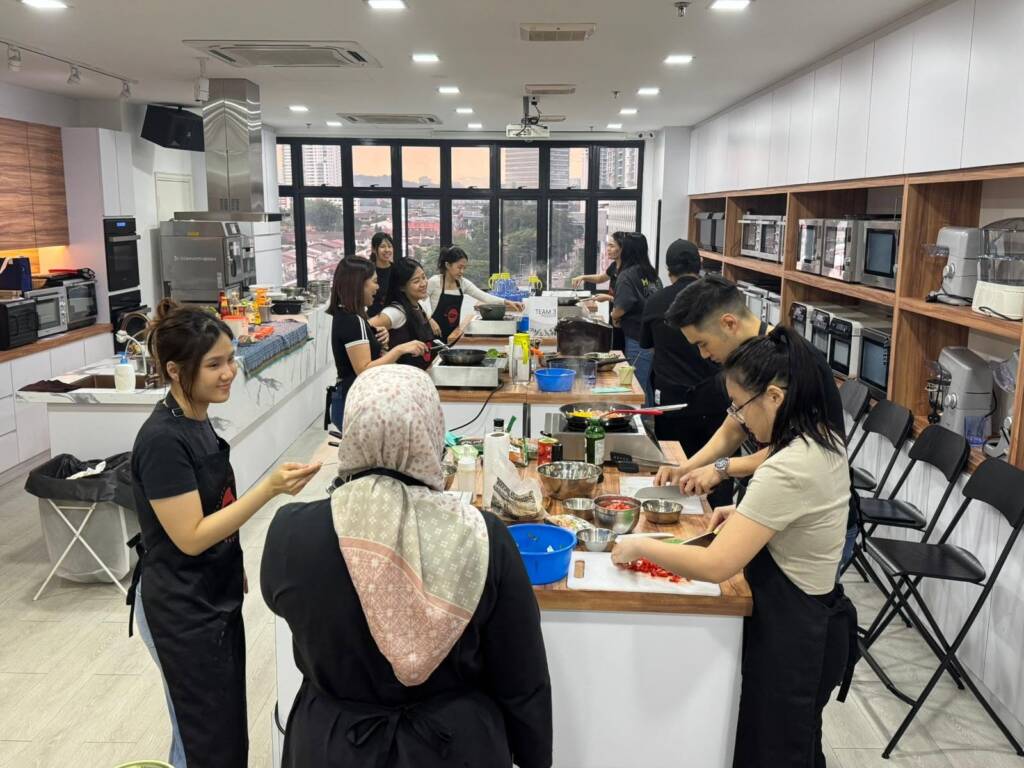
Food-based activities sidestep most of these issues by design. Everyone eats. Everyone can chop, stir, plate, and taste — and nobody arrives needing prior experience to contribute meaningfully. The fun team bonding activity programmes at Palate Team Building are guided by professional chefs at every station, which means the focus stays on the team rather than on individual culinary skill.
This is not a small thing. When a format genuinely includes everyone, everyone actually bonds — not just the participants who happen to enjoy the format.
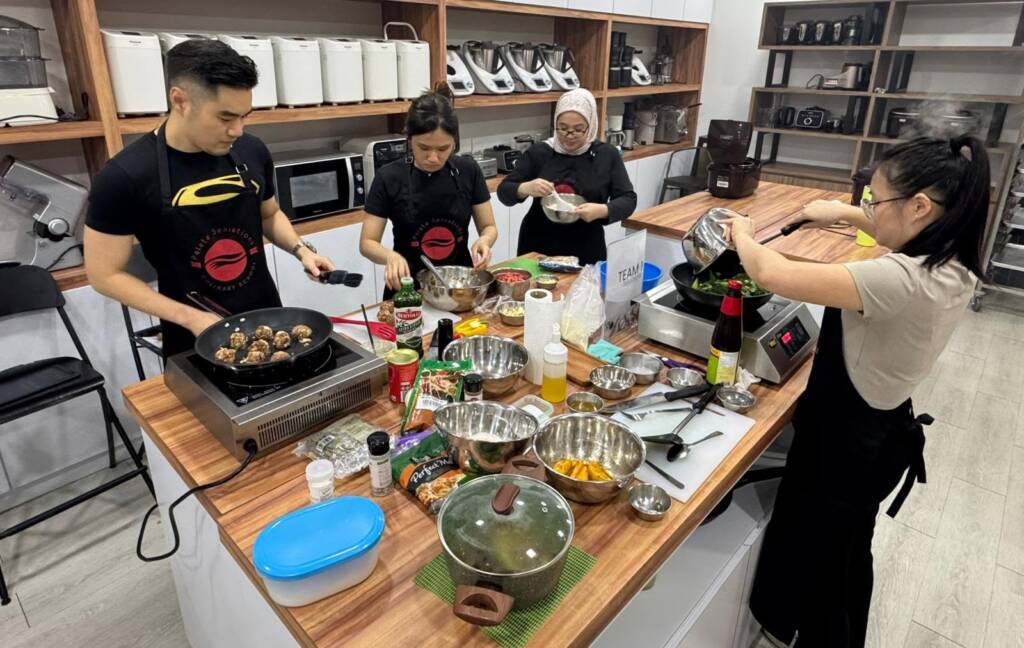 The Low-Stakes Kitchen: Where Mistakes Become the Best Part
Here is something counterintuitive that holds consistently true in team bonding: vulnerability and small imperfections accelerate connection faster than polished performance.
When people make a small mistake together and laugh about it — when the caramel burns slightly, or the dumplings come out looking more enthusiastic than elegant, or someone’s timing is just a little too confident — something opens up between them. The atmosphere shifts. The guards come down. Conversation flows differently.
This is exactly what the kitchen enables. Kitchen mistakes are low-stakes almost by definition. Nobody loses a client over a slightly over-seasoned sauce. Nobody’s career is affected by an imperfect knife cut. The stakes are just high enough to make the work feel meaningful — and just low enough that mishaps become shared laughter rather than genuine stress.
Compare this to team building formats where mistakes feel costly — a competitive outdoor challenge, a tightly judged performance exercise — and you can see why cooking produces a different kind of atmosphere. The best culinary team building sessions balance this carefully: enough challenge to stimulate real communication and collaboration, not so much that the fun gets squeezed out.
Over 20 years and more than 500 corporate sessions in Singapore and Malaysia, Palate Team Building has refined exactly this balance. As one participant, Lillee, put it simply: “The chefs were very professional and made the whole session fun for all of us.” That combination — professional structure alongside genuine enjoyment — is what makes the format work.
What Teams Actually Walk Away With
Fun matters. A team that has genuinely enjoyed an afternoon together will feel differently about each other the next morning. But for HR and L&D teams justifying the investment, it is worth being specific about what food team building delivers beyond a good time.
Communication. Cooking requires constant, real-time coordination. Teams have to speak clearly, listen actively, and adapt quickly when plans change — the same skills that define effective collaboration in every workplace context.
Natural leadership. Timed cooking tasks reveal who leads, who supports, and how teams distribute decisions under mild pressure. These are useful things to observe, and they translate directly into development conversations afterwards.
Creative problem-solving. Mystery box challenges and open-ended recipe tasks ask teams to work with constraints, improvise, and make fast decisions together. Competencies that matter, long after the aprons come off.
Stress relief. Shared laughter, physical activity, and the satisfaction of making something edible from scratch reliably improve mood. Not as a side effect — as a core outcome. Teams that feel less stressed tend to communicate better the following week too.
Relationships that go deeper than “we work together”. Cooking side by side creates conversations that would never happen in a meeting. Teams discover things about each other — patience, humour, how someone handles a small crisis — that genuinely shift how they work together.
Palate Team Building’s in-studio team building programmes can be structured around whichever of these outcomes matters most to your team — from a fun afternoon session to a challenge-based leadership event, a CSR baking programme, or a fully customised corporate cooking experience.
 Frequently Asked Questions About Food-Based Team Building
Why does food team building work better than other team bonding formats?
Food-based team building works because it creates the conditions for real connection — shared purpose, natural role distribution, multi-sensory engagement, and collective achievement — all within one session. Unlike passive workshops or physically demanding activities, cooking is something every team member can contribute to meaningfully. Which means the bonding actually happens, rather than being hoped for.
Do team members need cooking experience to benefit from culinary team building?
Not at all. Palate Team Building’s programmes are designed for participants at every skill level, including those whose main relationship with the kitchen involves the delivery app. Professional chefs guide every session with clear instructions, and the focus is on the team experience rather than culinary mastery. Participants without cooking experience frequently report being among the most engaged people in the room.
How does cooking help with team communication specifically?
Cooking requires constant, real-time coordination — listening, adapting, communicating clearly about timing, and making collective decisions under mild pressure. Because the environment is enjoyable and the stakes are low, people communicate more openly than they tend to in formal training settings. It is essentially a communication exercise, but with better snacks.
Is food team building suitable for large corporate groups in Malaysia?
Yes. Palate Team Building’s studio near Buona Vista MRT supports groups of approximately 60 participants for in-studio cooking events, with larger and offsite formats available depending on group size and objectives. The team is happy to discuss what works best for your specific setup.
How is culinary team building different from taking the team out for lunch?
A team lunch is social but largely passive — you arrive, eat, and leave. Culinary team building adds active collaboration, structured challenge, professional facilitation, and the satisfaction of shared achievement. The team does not just share a meal; they earn it together. That difference is exactly what makes it stick.
Come Hungry. Leave Closer.
Food has always been how people find common ground — across cultures, generations, and awkward silences. What makes culinary team building so consistently effective is that it channels something people already understand instinctively and turns it into something a team can build together, professionally, in a single afternoon.
Palate Team Building has been Singapore’s specialist in culinary team bonding since 2005, with experience across more than 500 multinational and local companies. Whether your team needs a relaxed afternoon to reconnect, a challenge-based session to sharpen communication, a CSR baking programme with real community impact, or a fully customised corporate experience, every session is professionally facilitated with your team’s objectives in mind.
Explore Palate Team Building’s fun team bonding activities and discover what your team can create together. Or get in touch to talk through what would work best — the first conversation is always the easy part.
After all, the best team bonding session your company has ever had might start with a very simple question: what do you want to cook?
About the author
Lynette Foo is the founder of Palate Team Building Malaysia and a formally trained culinary professional with a background from Le Cordon Bleu Paris. With over 20 years of experience facilitating corporate team building events for more than 500 multinational and local companies in Malaysia and Singapore, Lynette combines deep culinary expertise with a practical understanding of team dynamics, workplace engagement, and experiential learning.